Bedding · Sleep temperature · Textile guide
Gingerlily Silk Bedding: Understanding Seasonal Fill Weights
A comforter is a small climate system: a layer between the sleeping body and the room, holding warmth while helping excess heat and moisture escape. With silk bedding, fill weight offers a useful first clue to how that layer may feel. But the number alone cannot predict a night’s comfort. Room temperature, the bedding shell, personal sleep habits, and the way a comforter is cared for all help shape the experience.
Published October 19, 2026
In one bedroom, a light silk comforter may be just enough: a breathable cover against a warm night, with no heavy blanket pressing down. In another, a denser fill may make sense as winter settles in and the room cools after dark. The difference is not simply summer versus winter. It is the interaction between a person and a particular sleep environment—one that can change from night to night.
Understanding seasonal bedding begins with a simple distinction. Fill weight describes how much insulating material is inside a comforter, often expressed as a weight per area or as the total weight of the fill. It is not the same as the comforter’s overall weight, which also includes its outer fabric and stitching. Nor does it describe warmth perfectly: two comforters with similar fill weights can feel different if their fibers, construction, or shells differ.
This guide explores how to interpret silk fill weight, compare lighter and warmer options, and choose a setup that suits changing temperatures. The aim is not to find one universal answer. It is to learn which details matter, so that a label becomes the start of an informed choice rather than a verdict.
What fill weight can—and cannot—tell you
Fill weight indicates the quantity of filling used in a comforter. In broad terms, more fill can provide more insulation, while less fill tends to produce a lighter layer. Yet this relationship is not a direct temperature scale. A comforter’s warmth depends on how its fill traps air, how evenly it is distributed, how the comforter is quilted or stitched, and how much warmth escapes through the shell.
That distinction matters when comparing silk comforters. Silk is often chosen for a draped, relatively light feel, but the phrase “silk bedding” covers several constructions. A silk-filled comforter might have a cotton shell, a silk shell, or another outer fabric. A silk duvet cover, by contrast, is a removable cover rather than an insulating insert. The materials can work together, but their jobs are different: the fill contributes insulation; the shell contains it and provides the surface that touches the rest of the bedding.
Product descriptions may state fill weight in grams per square metre, total weight, a seasonal category, or another specification. These figures are not always directly comparable. Before drawing conclusions, check what the measurement refers to. Is it the fill alone, the whole comforter, or a stated weight class? Does the size change the total weight? A larger comforter can contain more material overall while using a similar amount per unit of area.
When a listing does not clearly explain its units or construction, treat the label as a general guide. Look for the fill material, shell material, care requirements, and any details about layers or attachment points. Those facts can make a comparison more meaningful than an isolated number.
Lightweight silk fill for warm rooms and warm sleepers
A lightweight comforter may suit people who prefer a covering without a strong sensation of weight, live in a warm climate, or keep the bedroom comfortably warm through the night. It can also be a practical layer for a home where temperatures vary little between seasons. In these settings, a thick insert may feel unnecessary, while a thin sheet alone may not provide the reassuring coverage a sleeper prefers.
Warm sleepers often notice the balance between insulation and ventilation. The goal is not necessarily to eliminate warmth; it is to avoid trapping more heat than the body and room can comfortably manage. A lighter fill can be one part of that balance, alongside breathable sleepwear, a suitable sheet, and sensible room ventilation.
Seasonal names are helpful but broad. “Summer weight” does not mean the same thing in every home. A cool, air-conditioned bedroom may need a different layer from a naturally warm room during a humid spell. Likewise, someone who sleeps cold may find a supposedly light comforter comfortable through much of the year, while another person may prefer it only during the warmest months.
Think of a lightweight option as a tool for a specific sleep environment, not a guarantee of coolness. Bedding cannot independently control room temperature, and comfort varies among individuals. A few nights of observation—whether you wake hot, reach for another layer, or feel comfortable until morning—can help establish whether the weight is working for you.
Warmer fill for cold nights and cooler bedrooms
When a bedroom loses heat overnight, a warmer comforter can help hold more warmth around the sleeper. Higher fill amounts generally make a useful starting point for comparison, but construction remains important. A comforter must keep its filling distributed across the bed; shifting or thin areas can leave warmth uneven. Look for descriptions of quilting, stitching, baffles, or other features that help keep the fill in place.
People who sleep cold may welcome a more insulating layer even when other household members do not. In a shared bed, different warmth preferences can complicate the decision. Separate blankets, adjustable layers, or a combination of lighter and warmer bedding can offer more flexibility than trying to make one comforter suit two very different comfort needs.
More insulation is not automatically better. If a room is warm, an overly heavy fill can leave a sleeper uncomfortable, regardless of the season printed on the label. A comforter that feels wonderfully cozy at bedtime may become too warm several hours later as the body and bedroom conditions shift. The best seasonal bedding provides enough insulation for the coldest part of the night without leaving you overheated at its warmest.
One layer all year or a seasonal change?
There are two practical approaches to seasonal bedding. The first is to choose one moderate, versatile comforter and adjust the surrounding layers. The second is to use different weights as conditions change. Neither approach is inherently superior; the right fit depends on the climate, storage space, household preferences, and how much variation the bedroom experiences.
| Approach | May suit | Points to consider |
|---|---|---|
| One versatile weight | Rooms with modest temperature changes, or sleepers who prefer a consistent bed setup. | Use sheets and removable layers to adapt; make sure the chosen weight is comfortable in both typical warm and cool conditions. |
| Seasonal weights | Homes with pronounced seasonal shifts or sleepers with distinct summer and winter preferences. | Requires storage and attention to care instructions; the room, not just the calendar, should guide the changeover. |
| Adjustable layers | Couples, changeable climates, or people whose comfort needs vary from night to night. | Check that layers can be secured properly and do not bunch or slide during sleep. |
A moderate year-round option can be a useful compromise, especially when a duvet cover and sheets can be changed with the weather. Layering offers another route: a lighter comforter can be paired with an additional blanket in colder conditions and used alone when the room warms. Layering is flexible, but it works best when each piece stays in place and the sleeper can remove warmth easily during the night.
Some bedding systems are designed to connect separate weights using ties or buttons. These can offer a way to adapt insulation, but compatibility is specific to the design. Check the maker’s instructions before joining layers; similarly named products are not necessarily built to attach to each other.
The shell and the surrounding layers matter
Fill weight is only one part of the sleep system. The shell—the fabric encasing the fill—affects how the comforter feels, how it drapes, and how it interacts with a duvet cover. A cotton shell and a silk shell can create different surface experiences, even when the fill is similar. Weave and fabric weight also affect hand feel and airflow. For that reason, “silk-filled” and “silk-shell” describe different properties, and a product may have one without the other.
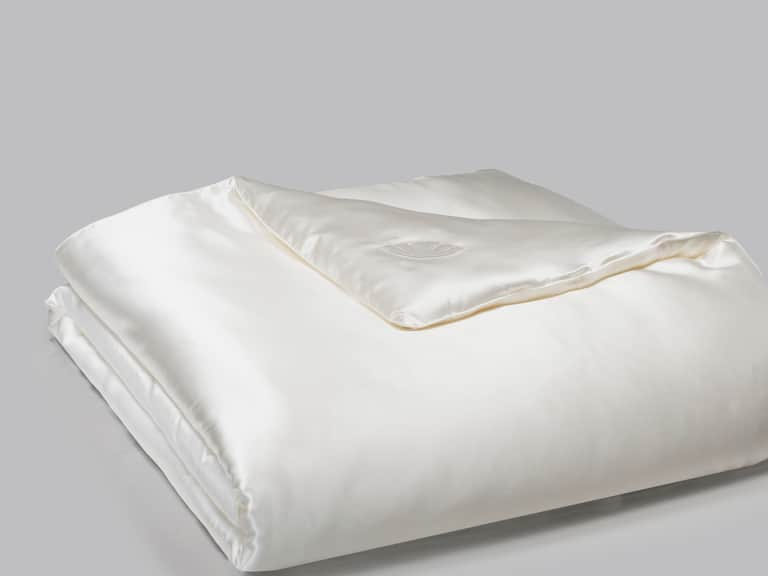
A duvet cover adds another layer between the comforter and the sleeper. It can protect the insert from everyday contact and can be removed for cleaning, but its fabric contributes to the feel of the bed. A Gingerlily Forget Me Not Silk Duvet Cover, for example, is a silk cover with a watercolor-inspired design and an ivory border. It is not a comforter fill-weight option; it is an outer layer that can be paired with a compatible insert. Check dimensions and attachment details so the cover fits the comforter and keeps it in position.
Sheets matter, too. A crisp cotton percale sheet may feel different against the skin from a smoother silk layer, and sleepwear can alter the impression of warmth. Mattress protectors, room airflow, and the number of blankets also contribute. Considering the whole arrangement is more useful than expecting a single fill specification to determine the temperature of the bed.
A practical way to compare silk comforters
When comparing Gingerlily silk bedding or any other silk comforter, start with your own experience rather than an idealized picture of a season. Ask what usually happens during a full night of sleep. Do you wake warm, cool, or comfortable? Is the room temperature stable, or does it drop before dawn? Do you use the same bedding in summer and winter? These observations provide a real-world baseline.
- Check the fill specification. Identify the units and confirm whether the stated figure describes the fill, the complete comforter, or a category of warmth.
- Identify the fibers and shell. A silk filling and a silk outer shell are separate details. Read each specification rather than assuming one from the other.
- Review the construction. Quilting, stitching, ties, and other features influence how the fill is held in place and how the comforter fits inside a cover.
- Match the likely room conditions. Consider heating, air conditioning, ventilation, climate, and the temperature you tend to maintain at night.
- Factor in personal preference. Some people value a light covering; others want a more enveloping feel. There is no single correct amount of bedding for everyone.
- Read care instructions before deciding. Cleaning requirements can affect how practical a comforter is for your household and how you plan to protect it.
If possible, use the manufacturer’s stated warmth guidance alongside the material and construction details. Where a listing provides no clear comparison between weights, avoid trying to infer an exact temperature rating from the word “light” or “all-season.” Those terms are useful shorthand, not a substitute for transparent specifications.
Care can influence how bedding performs over time
Silk bedding can require gentler handling than everyday sheets. Care instructions vary by construction, so never assume that a silk-filled comforter can be washed simply because a silk duvet cover can be. Some comforters may be designed to air out and spot-clean, while a removable cover may have its own washing directions. Follow the care label for the specific item.
Using a compatible duvet cover can help limit direct contact with skin oils, dust, and spills. It also makes routine cleaning more manageable because the outer layer may be easier to remove and wash than the comforter itself. This does not remove the need to care for the insert, but it can reduce how often it needs attention. Airing a comforter according to its care guidance can help refresh it between deeper cleaning needs.
Before laundering any silk component, check the water temperature, detergent guidance, drying method, and whether professional care is recommended. High heat, rough handling, or an unsuitable detergent can damage delicate fibers. Store seasonal bedding clean and fully dry, in a breathable storage bag or container, away from moisture and compression that could affect its shape.
These steps are not merely housekeeping. A comforter is a textile structure, and its feel depends on the condition of the fabric and the way the fill remains distributed. Care that respects those materials helps preserve the qualities that made a particular weight appealing in the first place.
Common misconceptions about seasonal fill weight
“More fill always means a better comforter.” More fill can mean greater insulation, but it may not suit a warm sleeper or a heated bedroom. More is useful only when it matches the conditions and preference.
“A summer-weight comforter is only for summer.” A lighter option can work year-round in a warm home, while someone who sleeps cold may need more warmth even in spring. The room and the sleeper matter more than the month.
“Silk bedding is automatically cool.” A fiber’s reputation cannot guarantee how an entire bed will feel. Fill amount, shell, cover, room conditions, sleepwear, and individual comfort all play a role.
“Thread count tells me how warm it will be.” Thread count is a measure associated with fabric construction, not a direct rating of comforter insulation. It may describe a shell or cover, but fill and construction are central when comparing warmth.
“All silk items can be cared for the same way.” A duvet cover, pillowcase, and filled comforter are different textile constructions. Their care instructions may differ substantially, so check each label separately.
Choosing for a real night, not an abstract season
Seasonal bedding is easiest to understand when the bedroom becomes the map. A coastal home with mild nights, a heated apartment, and a drafty room beneath an old roof may all call for different fill weights during the same month. Even within one home, preferences can shift: a change in room temperature, sleepwear, or the other layers on the bed may alter what feels comfortable.
Start with the lightest arrangement that reliably keeps you comfortable, then add flexibility where you need it. If a single layer leaves you cold, consider a warmer weight or an additional blanket. If you wake overheated, reduce insulation or look at the combined effect of the comforter, duvet cover, sheets, and room conditions. Make one adjustment at a time so you can tell what helped.
Fill weight is an important clue, but it is not the whole landscape. The fibers, shell, construction, care requirements, and sleeping environment all contribute to the final experience. With those factors in view, choosing between lightweight and warmer silk bedding becomes less like guessing at a season and more like reading the conditions around you.