Bedding • Materials & Certification
Certified Organic Wool Comforters: What GOTS Certification Tells You
A certification label can make a complex supply chain easier to read—but only if you understand its boundaries. Here’s what the Global Organic Textile Standard can tell you about wool bedding, what it cannot promise, and how to compare a certified organic wool comforter with care.
Wool begins its journey far from the bedroom: on an animal, in a landscape shaped by weather, grazing, water, and the work of people who tend flocks and process fiber. By the time it becomes the filling inside a comforter, that material may have passed through several stages—sorting, washing, preparation, spinning or batting, assembly, and finishing. A label saying “organic” points toward a set of production claims, but it does not automatically explain every step.
That is where certification can help. The Global Organic Textile Standard, commonly known as GOTS, is a textile-processing standard built around organic fibers and requirements for processing, environmental management, and social responsibility. For someone researching GOTS wool bedding, the useful question is not simply whether a label appears. It is what the certification applies to, which components are covered, and whether the finished comforter’s construction and care suit the sleeper who will use it.
Certification is one piece of a bedding decision, alongside fill weight, shell fabric, quilting, temperature preference, and care instructions. This guide explains how to read the pieces together, including what to check when comparing certified choices such as the Healthy Choice Medium Weight Organic Wool Comforter.
What GOTS is designed to cover
GOTS is a standard for textile products made with organic fibers. Its scope reaches beyond the farm-level origin of a fiber to include defined stages of textile processing and manufacturing. The standard sets requirements for the use of organic raw materials and restricts or regulates certain chemical inputs during processing. It also includes environmental criteria for processing facilities and social criteria related to working conditions.
That broader scope matters. A fiber can begin as organic material, yet pass through a chain of manufacturing steps that raises separate questions about dyes, finishing agents, wastewater, or workplace practices. A textile certification framework seeks to make more of that chain accountable than a raw-material claim alone would do.
Still, the words on a product page need to be read precisely. A comforter might contain certified wool, a certified cotton shell, or both. A claim about one component should not be assumed to apply to every thread, tie, label, or packaging material. Certification categories and labeling rules can distinguish among products depending on their certified fiber content and the stages covered. The current certificate and the exact product scope are the best sources for understanding a particular claim.
When evaluating a certified organic wool comforter, look for clear wording about both fill and shell. If the listing says “GOTS-certified wool” but gives no information about the casing, ask whether the cotton shell is certified too. If the shell is described as organic cotton, check whether that claim is independently certified or simply stated by the manufacturer. Specifics are more useful than an attractive phrase by itself.
Why wool certification is not just about a fiber name
Wool has a distinct structure and performance profile. Its crimped fibers can trap air, helping provide insulation, while wool can absorb moisture vapor before it feels wet. Those characteristics can contribute to a bedding layer that feels warm without being as dense as some alternatives. But the comforter’s actual feel depends on more than the species of fiber or a certification mark.
Fill quantity and distribution affect how warm and lofty a comforter feels. A lightweight fill may suit a warm bedroom or someone who tends to sleep hot; a heavier fill may be more comfortable in a chilly room. Quilting or tufting helps hold batting in place, while the shell influences hand feel, airflow, and the way the comforter moves over the body. A well-defined certification claim does not tell you whether the weight is right for your climate or whether the construction will feel comfortable to you.
There is also an important distinction between fiber certification and animal-welfare language. GOTS sets requirements across textile production, including social criteria, but its label should not be stretched into an all-purpose guarantee about every aspect of animal husbandry or every environmental impact associated with a farm. If pasture management, transport, or a specific welfare practice is important to you, look for a clear, separately substantiated claim that addresses that topic.
Likewise, “organic” does not mean that a product is impact-free. Raising animals, washing wool, processing textiles, transporting materials, and caring for bedding all use resources. Certification establishes criteria within its defined scope; it does not erase the environmental footprint of production or replace a full life-cycle assessment.
How to check a certification claim
A careful label reader follows the claim from the product back toward its evidence. Product pages may summarize certification in a sentence, while certificates or certification databases provide more formal details. If documentation is available, check that the certificate is current and relevant to the named company, facility, product category, or supply-chain stage. A certification for a manufacturer is not necessarily proof that every item it sells is covered in the same way.
- Identify the certified component. Is the claim about the wool filling, cotton shell, or complete textile product?
- Look for the standard’s full name. A specific reference to the Global Organic Textile Standard is clearer than a vague “eco-certified” statement.
- Check who issued or verifies the certification. Where possible, confirm the certification body and the scope of the relevant certificate.
- Read the product details alongside the label. Material composition, origin information, construction, and care directions help describe what is actually being offered.
- Notice what is not stated. Missing details are not proof of a problem, but they are a reason to seek clarification before relying on a broad claim.
Certification systems can update their requirements over time, and product listings can lag behind changes in documentation. For a high-confidence answer about a specific item, consult current certification records or request the relevant certificate from the seller or manufacturer. A clear response should identify the product and the scope rather than relying only on a general statement about a brand.
What GOTS does not guarantee
Perhaps the most useful way to understand a certification is to recognize its limits. GOTS is not a rating of comfort, softness, loft, warmth, or durability. It does not tell you whether a particular wool comforter is suitable for summer, whether its fill will feel too heavy, or whether its dimensions will fit your bed. Those questions require product specifications and, where possible, the practical experience of using and caring for the item.
Nor should a certification be treated as medical advice. Descriptions such as “hypoallergenic” can be used in bedding marketing, but no comforter can guarantee that every person with allergies, asthma, eczema, or chemical sensitivity will experience no reaction. Sensitivities vary, and the full bedding system—including detergent, dust, room conditions, and other textiles—can matter. People with specific health concerns should discuss them with an appropriate health professional.
A GOTS label also does not automatically mean a comforter is machine washable. Wool batting may shrink, felt, or become uneven if washed in a way that is unsuitable for its construction. Some comforters are designed for limited spot cleaning and airing rather than a conventional wash cycle. Always follow the care instructions for the exact item; the word “organic” is not a cleaning method.
Finally, certification is not a substitute for transparent product information. A useful listing should explain fiber content, shell material, fill weight or weight class when available, construction, dimensions, and care. Where possible, it should clarify which elements are certified and what the certificate covers. The more complete the information, the easier it is to compare products on their actual merits.
Reading a wool comforter specification
Once the certification claim is understood, turn to the construction. “Medium weight” is a helpful starting point, but it is not a universal warmth measurement. Bedroom temperature, bedding layers, personal heat sensitivity, and seasonal habits all influence how a comforter feels. Fill density—often stated in grams per square meter—can provide a more concrete point of comparison when the information is available, though different constructions and materials may still feel different at similar weights.
Shell fabric deserves equal attention. A cotton shell can provide a familiar, breathable surface, while weave and finish affect its feel and durability. Examine whether the shell is described as organic or certified, and distinguish that statement from a certification claim about the wool. A product can be explicit about one material and less specific about another.
Construction determines how the fill stays distributed. Quilting, wave patterns, hand-tufting, and perimeter stitching are different methods for securing batting. These details can help reduce shifting, though no construction eliminates the need to follow care directions. Corner ties are useful when a comforter is placed inside a duvet cover, helping keep the insert aligned as the bed is made and used.
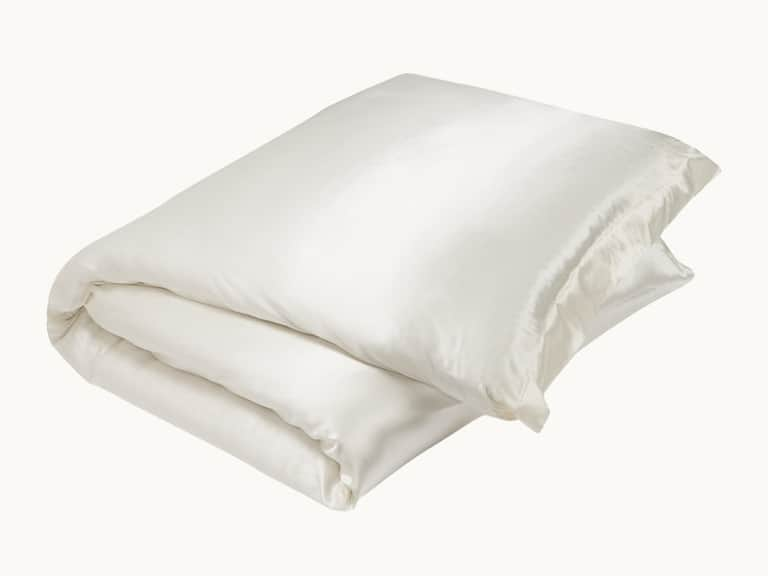
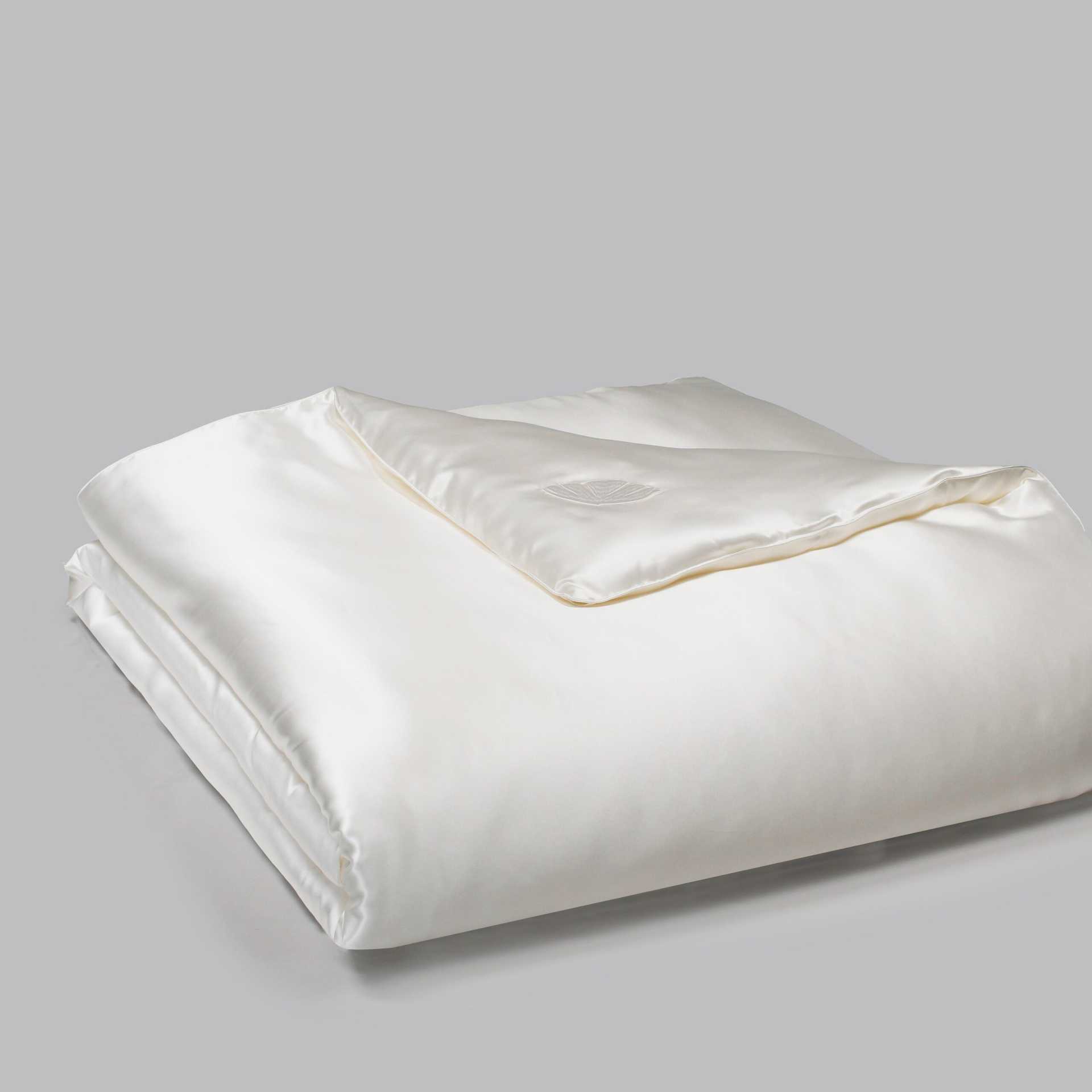
The Healthy Choice Medium Weight Organic Wool Comforter is described as having 350 grams of organic wool per square meter, an organic cotton sateen cover, and wave-pattern quilting intended to help keep the wool evenly distributed. Its care instructions say not to wash the comforter, recommending spot cleaning with a small amount of water and mild soap, followed by air drying. The listing also describes certification for the wool and cotton. Those are useful specifications to compare, but shoppers should confirm the current documentation and exact certification scope if that distinction is important to them.
Practical questions to ask before choosing
Certification helps clarify production criteria; the best comforter for a household still depends on daily use. A few direct questions can turn a broad claim into information that supports a practical decision.
- What materials are in the fill and shell? Ask for percentages and any blend components rather than relying on a single headline description.
- Which parts are covered by GOTS certification? Confirm whether the claim applies to the wool, shell, finished product, or another defined stage.
- What warmth level suits my room? Consider overnight temperatures, heating, other blankets, and whether you tend to sleep warm or cold.
- How is the fill secured? Quilting, tufting, and stitching affect distribution and can help explain the comforter’s feel and maintenance needs.
- How should it be cleaned? Check whether the instructions permit washing, require spot cleaning, or recommend professional care.
- Does it fit my duvet cover and bed? Compare dimensions and check for corner ties or loops if you use a cover.
- What does the warranty cover? A warranty may address defined manufacturing defects, but it is not the same as a promise of a particular lifespan or performance under every condition.
These questions also help separate an evidence-based description from broad promotional language. Claims about temperature regulation, allergy suitability, or sustainability should be considered in context and supported by details where possible. No single label can answer every question about comfort or personal preference.
Care that protects the textile
Wool comforters often benefit from a duvet cover because the cover takes on much of the everyday contact with skin, hair, and household dust. That can reduce the need to clean the inner comforter, which is especially useful when its care instructions restrict washing. Remove and launder the cover according to its own label, and allow the comforter to air out periodically in a dry, well-ventilated place.
Do not assume that every wool comforter can be washed simply because another wool product can. Batting, stitching, shell fabric, and finishing vary. Water and agitation may cause wool fibers to mat or shrink, while excess heat can damage materials or distort the fill. The manufacturer’s specific instructions take precedence over general advice. If a stain is substantial, ask the maker or a qualified cleaner how to proceed before applying solvents or saturating the fabric.
Storage matters, too. Make sure the comforter is completely dry before putting it away, and avoid compressing it for long periods when possible. A breathable storage bag and a cool, dry location can help protect it from moisture and musty odors. Following these simple habits supports the bedding’s usable life, whatever its certification status.
A label is a map, not the whole landscape
GOTS certification can make an organic textile claim more meaningful by addressing defined requirements for fiber and processing, alongside environmental and social criteria. For wool bedding, it can provide a framework for understanding parts of the journey from raw material through textile production. Its value lies in that documented scope—not in assumptions that it guarantees perfect comfort, a particular health outcome, or zero environmental impact.
Read the certificate and product details together. Check whether both wool and shell are covered, compare fill weight and construction, and make sure the care instructions suit your routine. Then match those facts to your sleeping temperature, climate, and bedding setup. A certified organic wool comforter is not automatically the right choice for every bed, but a precise certification claim can be a useful piece of evidence in a thoughtful comparison.
Good bedding decisions rarely come from one impressive word on a tag. They come from understanding materials, asking what a claim actually covers, and choosing a design that fits the room and the person beneath it. In that sense, certification is less a final answer than a well-marked trailhead: a place to begin asking better questions.